Landmark Archaeological Exhibition Opens in Makhachkala, Showcasing Dagestan's Ancient Past
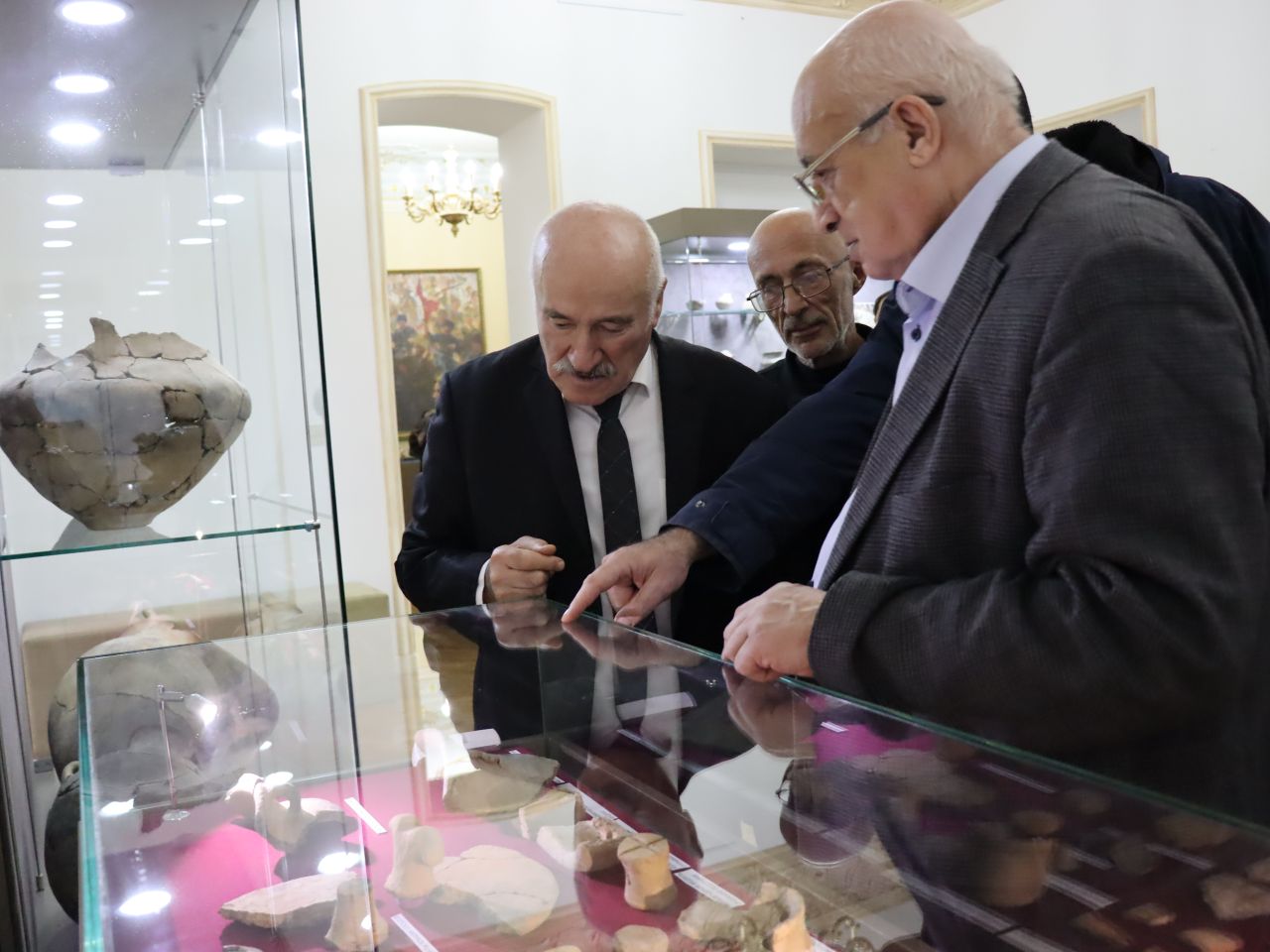
"Latest Discoveries in Dagestani Archaeology" new exhibition has opened at A. Taho-Godi National Museum of the Republic of Dagestan. Featuring extraordinary artifacts from recent rescue excavations, the display offers groundbreaking insights into the ancient human settlement of the Northern Caucasus, reshaping the historical narrative of the region.
Organized by the Institute of History, Archaeology and Ethnography of Dagestan Federal Research Centre, RAS, the exhibition coincides with the 90th anniversary of Professor Magomed Gadzhiev, a pioneer of Dagestani historical science. The artifacts were uncovered during construction of Derbent bypass highway.
“These finds are living testimony to the multi-layered, multi-ethnic heritage that forms the bedrock of our identity. They fundamentally expand our knowledge of the ancient civilizations that flourished here” Pakhrudin Magomedov, Director General of the National Museum said.
The exhibition highlights two pivotal sites:
• A Mesolithic settlement (12th–8th millennia BCE): The first stratified monument from this period discovered in Dagestan’s lowlands, providing proof of human habitation over 10,000 years ago.
• The Early Bronze Age village “Zidiyan-Kazmalyar” (mid-4th millennium BCE): The site features remains of circular stone dwellings and has yielded painted pottery, fine ceramics and flint tools, offering clear evidence of early agriculture and settled life.
The opening ceremony was attended by leading scholars, including Academician Khizri Amirkhanov, who emphasized the critical importance of sustained, systematic archaeological research for preserving national heritage. Aligned with the mission of the Fund for Support of Islamic Culture, Science and Education, the exhibition stands as both a scientific milestone and a cultural beacon—affirming that a deep understanding of our ancestral legacy is fundamental to fostering historical consciousness, strengthening civic identity, and inspiring future generations.